

























Bondage | Bdsm
Bondage & BDSM - ropes, restraints, harnesses and gear designed for control, restriction and intensity.
Gay Bondage and BDSM: setting the scene for restraint and control
When a man ties up, gags or locks down his partner, he is not just creating a sensation: he is building a scene, with a beginning, a level of intensity and a role for each person involved. That is what this section brings together: ropes and handcuffs for immobilisation, gags to take away speech, hoods to erase the face, clamps and whips to mark the skin, collars to establish hierarchy, and chastity cages to extend anticipation. Each piece has a clear function within gay power play, and should be chosen first for what it makes you feel — not for how it looks alone.
Handcuffs, ropes and restraints: the dominant’s first move
Restraining a partner’s wrists or ankles changes the dynamic of a scene instantly: choice is removed, and submission begins. Padded cuffs keep restraint accessible and comfortable, without marking the skin, making them ideal for sessions focused more on control than pain. Steel cuffs, chains and wrist-to-ankle spreaders take things further: the weight of the metal, the sound of the lock and the impossibility of getting free alone create a feeling that fabric or soft leather cannot reproduce.
Bondage rope brings a different kind of restraint. Tying a partner, gradually immobilising him, playing with the tension of the rope rather than the click of a buckle: this is a form of control that builds over time, and it requires a basic level of technique to remain comfortable throughout a session.
Padded or steel restraints: a question of level, not style
Padding protects the wrists during movement and works well for longer or repeated use. Stainless steel, on the other hand, does not give way. It locks with a key and adds weight to the body: it is designed for partners who already know their limits and want a restraint that, once secured, is no longer up for negotiation.
Gags: taking away speech, not safety
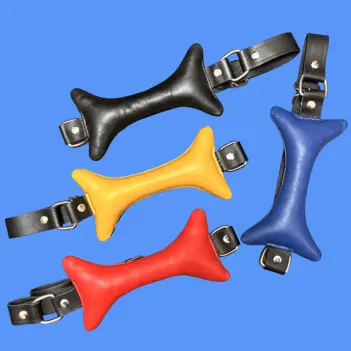
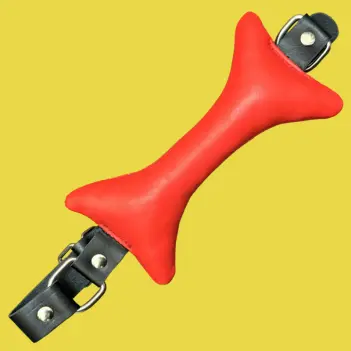
A gag adds a strong psychological edge to a gay BDSM scene: the submissive can no longer negotiate, protest or ask for a pause with words. Ball gags, silicone bit gags, spider gags, mouth gags and leather-strap gags all change the position of the mouth and the intensity of the experience, from discreet models that still allow nasal breathing to open-mouth designs that leave the wearer more exposed.
One technical point matters more than appearance here: a gag must never fully block breathing, and the person wearing it must never be left alone. Since speech is no longer possible, a non-verbal signal — dropping an object, using an agreed hand movement — must replace the usual safe word for as long as the gag is worn.
Hoods, muzzles, masks and blindfolds: erasing the face, changing identity
Covering a partner’s head transforms the entire scene: the face disappears, identity fades, and what remains is the role being played. Leather or neoprene hoods cover the whole head and create full anonymity, while muzzles and open hoods keep the mouth accessible for practical use. Masks and blindfolds are lighter options: they remove sight without fully isolating the wearer, intensifying touch and sound without requiring the same preparation as a full hood.
These pieces are also common in puppy play and rubber play, where visual transformation matters just as much as physical restraint.
Nipple clamps, impact play and flogging: controlled pain as part of the scene
Nipple clamps — clothes-peg styles, nipple grabbers, clamps connected by a chain — deliver targeted stimulation, with intensity adjusted simply by tightening or loosening the grip. They work well both for gradual discovery and for more advanced sessions, where the sharp sensation of removal becomes part of the play.
Whips, floggers, martinets and paddles belong to another register: repeated contact over a wider area of the body. The choice depends on the material and striking surface — a studded leather paddle leaves a stronger mark than a soft flogger — as well as the level of precision required, since a whip demands more control of movement than a paddle.
Collars and leashes: marking ownership
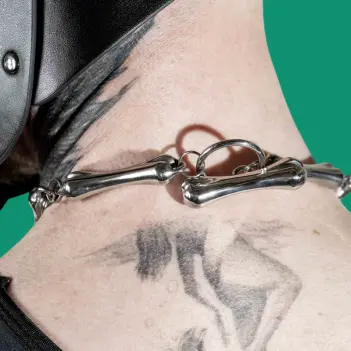
Placing a collar on a partner, whether in a gay BDSM scene or in puppy play, establishes hierarchy without needing to say it out loud. A padded collar remains comfortable over time, while a heavy leather or lockable collar places greater emphasis on control. Add a leash, and restraint becomes guidance: the person holding it decides the pace and the direction.
Chastity cages: control that continues beyond the scene
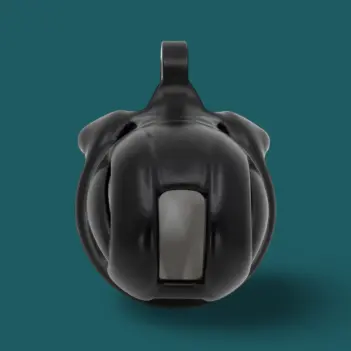
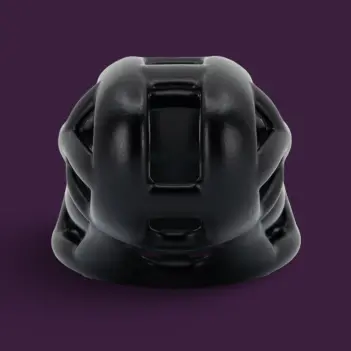
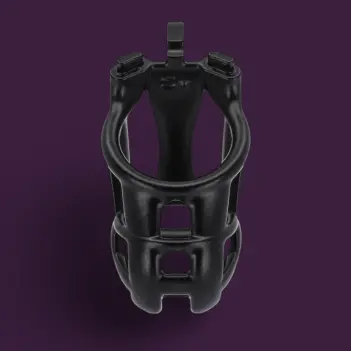
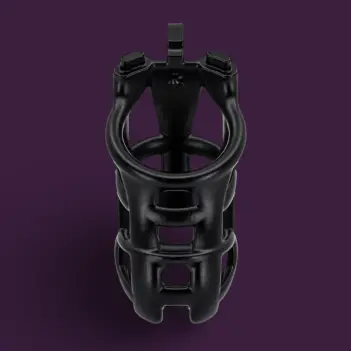
Unlike most items in this section, a chastity cage continues to act even after the session is over: it prevents erection and masturbation until the partner holding the key decides to release it. That delay — that organised frustration — is what gives it its central appeal in a domination-and-submission dynamic.
The material changes the experience directly: silicone stays flexible and is easier to wear for several hours, while stainless steel adds weight and coldness, intensifying the feeling of control but requiring more adjustment. The base ring size is the most important point: a ring that is too tight can restrict circulation, while one that is too loose will not hold the penis correctly. Sizing should be determined by measuring the penis at rest.
Longer wear requires strict hygiene and regular removal to let the skin breathe. This is what separates comfortable use over several days from irritation that forces the cage to be taken off early.
Playroom and dungeon equipment: outfitting the space, not just the body
Once several practices are combined — restraint, impact, gagging, collaring — the space itself becomes part of the scene. Bed restraints, benches, crosses, stools and suspension systems allow a partner to be fixed in a specific position and kept there without effort. This is the move from a single accessory to a scene that has been fully prepared in advance.
Breath control, gas masks and Extreme BDSM gear: for experienced players only
Breath control and practices classified as Extreme BDSM are among the most intense in this section: they act directly on a vital need and leave no room for guesswork. This type of equipment requires partners who already have solid foundations — clear communication, non-verbal distress signals and precise knowledge of the accessory being used — before it is introduced into a session.
Leather, steel, neoprene and silicone: materials that change the sensation
Leather remains the historic material of gay BDSM: firm structure, a recognisable look, a smell and a feel that are as much a part of the experience as the restraint itself. Stainless steel adds weight and coldness, two sensations that neither leather nor fabric can reproduce. Silicone is the natural choice for anything that goes near the mouth — gags, bits and mouthpieces — thanks to its neutral taste and easy maintenance. Neoprene and mesh allow hoods to be worn for longer periods without the same heat build-up as full leather.
Frequently asked questions about gay bondage and BDSM
How long can you wear a chastity cage?
For a first use, a few hours are enough to assess comfort and fit. With experience, wear can extend over several days, provided the cage is removed regularly to check the condition of the skin and strict hygiene is maintained throughout.
What are the risks of choosing the wrong chastity cage?
A cage that is too small or poorly fitted can restrict circulation and cause pain, while a cage that is too large will not work as intended. Poor maintenance can also lead to irritation or infection, which is why both the accessory and the area concerned should be cleaned carefully before and after use.
Which gag should you choose when starting BDSM?
A silicone bit gag or a small ball gag is better suited to a first experience, as these models allow easier breathing and can be removed quickly. Open-mouth gags and spider gags are better suited to players who are already comfortable with speech restriction.
How can you communicate safely while wearing a gag?
Since a verbal safe word becomes impossible, an alternative signal must be agreed before the scene begins: dropping an object held in the hand, or using a pre-arranged head or finger movement. The gagged person must never be left alone, so the dominant can react immediately in case of breathing discomfort or distress.
What is the difference between bondage and BDSM?
Bondage specifically refers to tying, restraining and immobilising the body with ropes, cuffs or straps. BDSM is a broader set of practices that includes bondage, but also domination, submission, pain play and role dynamics that do not always involve physical restraint.
Which accessories should you choose for a first BDSM session between men?
Adjustable pieces that are easy to remove are the best place to start: padded cuffs, a blindfold, a simple collar and adjustable nipple clamps. The idea is to explore sensations first before moving on to firmer forms of restraint such as chains, full hoods or chastity cages.


